

Organic gaining momentum in German grocery retail
Following a dip in inflation, organic products are gradually gaining momentum, with grocery retail and drugstores continuing to benefit from the sustainability trend. The Organic Food Industry Association (BOELW) reported that German consumers spent € 16.08bn on organic food and drink in 2023, a 5% increase from 2022. The growth is attributed to a higher price level, with purchased quantities remaining relatively stable compared to the previous year. Interestingly, the inflation rate for conventional foods was more significant at 9%, compared to 5% for organic products.
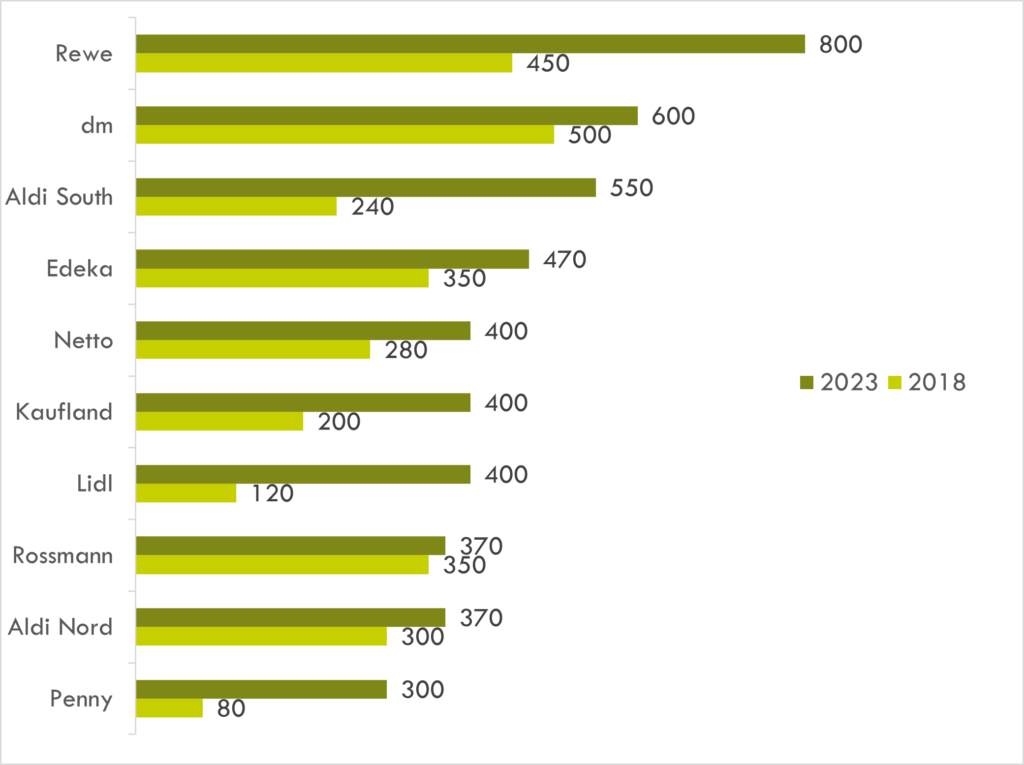
Two-thirds of organic sales, approximately € 10.8bn, flow through grocery retail and drugstores, marking a 7.2% increase from 2022. Discount stores, including Aldi and Lidl, have gained ground, constituting around 40% of the overall organic market.
While organic specialists generate only about a fifth of organic sales, organic food stores saw a slight growth of 0.2% compared to 2022. Smaller providers such as bakeries, butchers, farm shops, and health food stores contribute to the rest of the organic market.
Private label products in the organic segment are on the rise, constituting 56% of organic sales in 2023, up from 52% in 2022, according to BOELW. Major retailers are expanding their product ranges, and in the inflation-driven year of 2023, new entry-level labels like “Prima! Alnatura” or “Tegut Bio zum kleinen Preis” played a significant role. This trend is expected to persist.
Market share of organic market by channel

To get in touch with our Germany team